
Women’s football is growing rapidly, especially after the last world cup in 2023. The history of the sport however is not well known. In this article we will do a deep dive in the history of women’s football. We will answer questions as where did it all start and how did we get where we are now. Who are the key figures in the development of the game? Keep going for an interesting read.
The beginning of Women’s Football
Football was first mentioned around 1594 in one of Shakespeare’s plays; The Comedy of Errors and not much later in King of Lears. However, there is a serious lack of stories about the women’s game around those times. Now in 2023 Women’s Football is more popular than ever so one might think women have only playing for the last century. While actually their participation dates back to 1580. Sir Philip Sidney wrote a poem called A Dialogue between two Shepherds. He wrote:
‘A tyme there is for all, my mother often sayes,
When she, with skirts tuckt very hy, with girles at football playes.’
The next 300 years there is very little mention of the game in general. It was not until 1863 that something significant happened. The newly formed Football Association formed a set of rules for the game. They hoped to stop the on-pitch violence and make the game more accessible for women.

First recorded Women’s Football Game
On the 7th of May in 1881 the first women’s football match was recorded. What should have been an match between Scotland and England ended up being a vague situation where the nationalities of the players was called into question. Some believe a few of the players were from the theatre community and acted as football players.
The first match between the teams was a success. There were about 2000 people in the stands. Lily St Clair scored the first goal as a female player that was ever recorded. Scotland won the match with 2-0. Two other matches, in Glasgow and Manchester, had to be cancelled due to pitch invasions. The players escaped in a bus that was drawn by horses. Women’s Football was quite exciting in the 1800s.
Women’s Club Football on the Rise
Around the 1890s women’s club football slowly started to pick up. The famous Edinburgh Team, Madam Kenney’s, beat Grimsby Town Ladies in 1887. Women in factories formed club teams and records show that the teams played each other regularly. In 1895 the British Ladies Football Club was formed. The president, Lady Florence Dixie, made a huge difference to the game. She insisted that the players would wear practical clothes such as shinpads and proper boots.
The BLFC was able to attract an enormous crowd at the clash between North vs. South. The game took place on the 23th of March in 1895 and there were 10.000+ spectators. This also attracted attention to several women’s right movements such as Votes for Women in 1897 and the Women’s Social and Political Union in 1903.

The War did not stop Women’s Football
The history of women’s football takes us to one of the biggest hurdles. World War One certainly made playing sports more difficult. Women had to take on men’s jobs in the factories. The dark and unhealthy environment was not good for the workers so they were encouraged to engage in sporting activities outside of work. Football was a great outlet and the factories all had their own teams.
One of the most successful teams was Dick, Kerr & Co. The team played over 800 games and they won 746 of those. Lily Parr was not only their top goal scorer but also the countries. After scoring about 900 goals in her career she is still not beaten. The women were paid about 50p to cover the expenses. So we will call them the first professional women’s football players.
Can you believe that by 1921 there were about 150 women’s football clubs? Some of them drew about around 45.000 spectators to their games. International matches were just around the corner until World War One was finished. Women went back to their domestic roles and the professionals questioned whether football was good for women.
Football is Unsuitable for Women
This is was the FA decided on the 5th of December in 1921. The Women’s game was banned from professional grounds and pitches. The next 50 years women had to resort to public parks to play a bit of football. Not all the clubs gave up. All around England there were still about 30 clubs playing. Players took the initiative and started playing at rugby grounds and other places. The men’s game however grew so rapidly that the women’s game was overshadowed. Football Associations said “women’s football brings the game into disrepute”.

The First Women’s Football Association
Clubs and players never gave up on women’s football. Luckily society began to change in the 1960’s. Women campaigned for their rights and the first women’s football associations was a fact. The pre-cursor to the Women’s FA Cup was organized by the first chair and Honorary Secretary of the Women’s Football Organization. The next 20 years women’s football held her own. The pressure on the FA increased immensely and they eventually lifted the ban on women’s football. The players were now able to use ground affiliated with the FA and referees were allowed to officiate the women’s game.
First official International Match
In 1972 England’s Women’s team traveled to Scotland for their first official international football match. England won with stars such as Sylvia Gore, Lynda Hale and Jeannie Allot. The match was exactly 100 years later than the first official men’s football match. In the next 6 years there were only 25 international matches, but it is better than none. The FA realized the mistakes they made in the history of women’s football and they started to show interest. This slowly opened a lot of doors.
Taking the Women’s Game to the Next Level
In the 1990s the first plans to bring the Women’s Game to the next level were executed. The WFA launched a 24 club national league which expanded into three divisions of 10 teams. At the same time FIFA introduced the Women’s World Cup. The game grew globally and the finals in 1999 drew a 90.000 crowd.
1993 was one of the biggest years. The WFA wasn’t able to the develop women’s football any further. The financial pressure was to big so the associations voted to pass everything over to the FA. This gave the women’s game a lot more options. The FA established the Women’s Football Committee and a full time Co-Ordinator. The FA got control over the Women’s FA Cup, the national league and the league cup. All of this lead to the start of the Women’s Premier League.

Winning in the 2000s
The history of women’s football doesn’t stop there. We are in 2023 now and the game is more popular then ever. However we have seen this kind of growth before. In 2002 football was the top sport for women and girls in England. After hosting the Women’s Euros three years later no one could stop the England Lionesses. With the popularity came a deeper talent pool. The international teams, not just England, were growing stronger every year.
Women’s Football Today
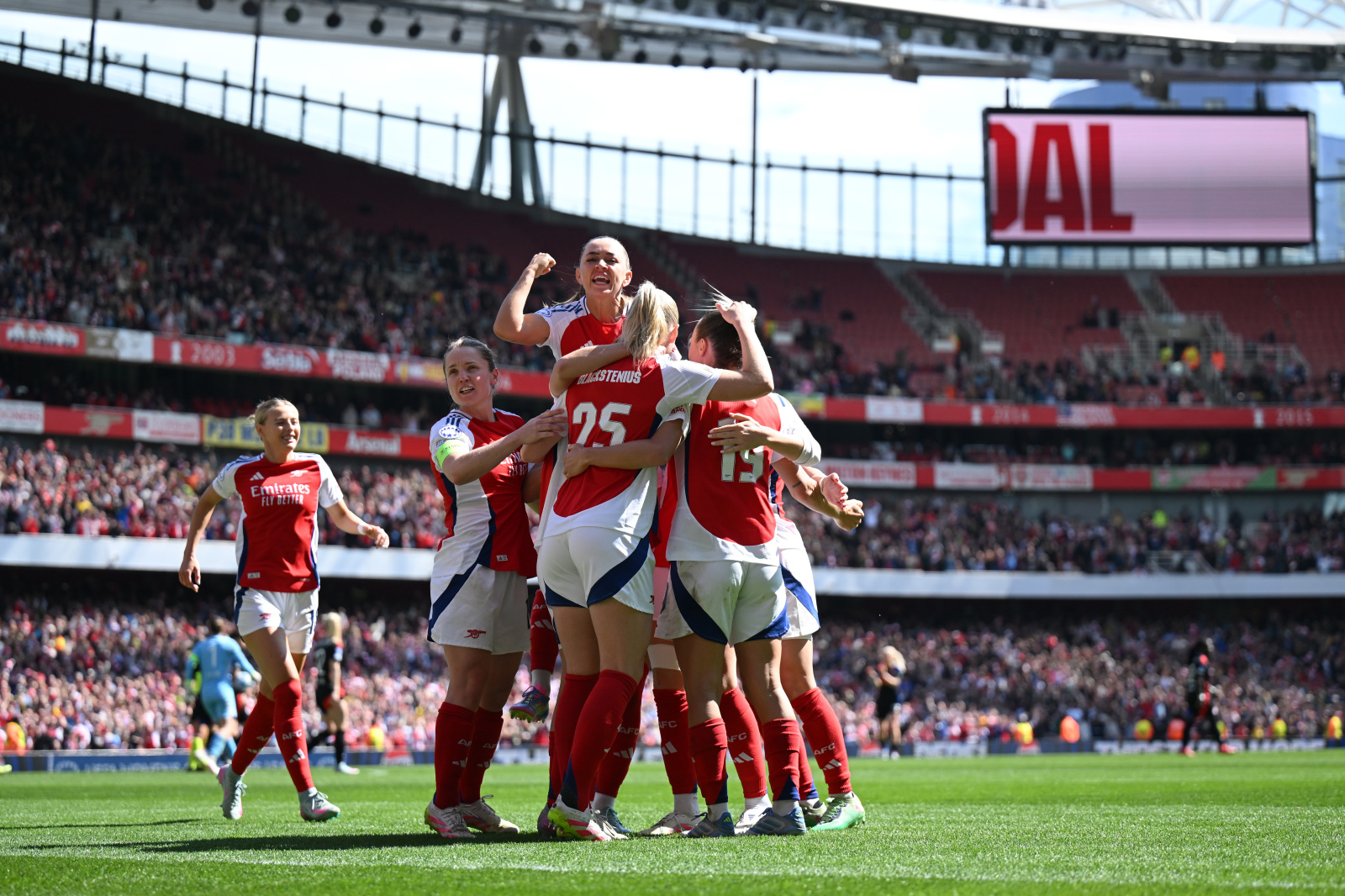
All those developments in the early 2000s made it possible for the Women’s Super League to form. At first as a summer competition, now one of the two main professional competitions of England. Since 2017 the women’s game is played alongside the men’s. With similar media attention, crowds and sponsorships. The income and revenues might not be the same, but the women’s game is growing faster than ever.
Fast forward to the home win in Wembley at the UEFA Women’s Euro 2022 in front of 87.192 spectators. This established the women’s game in such a way that the success is undeniable. A decade of investments and growth lead to this moment and still the England women continue to inspire young women and girls to play football. We could not be more proud of the England history of women’s football.


Leave a Reply