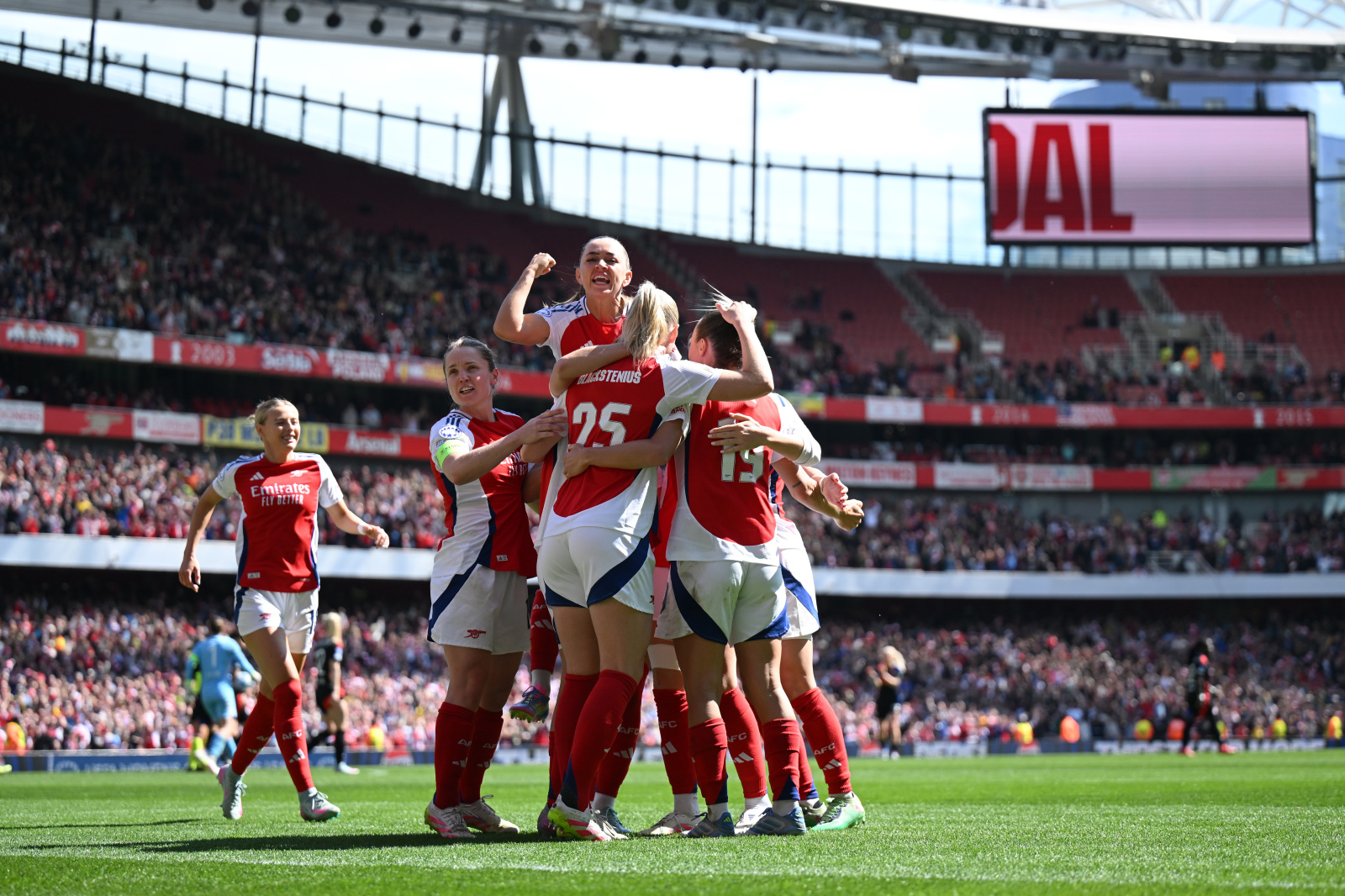
The Women’s Champions League is the top club competition in European women’s football, but its format is not always easy to follow. Qualification routes, match formats, and knockout rules have changed over time, especially with the introduction of a new league phase from the 2025/26 season.
This article explains how the Women’s Champions League works, from qualification and seeding to the league phase and knockout rounds. You’ll learn how teams enter the competition, how matches are structured, and what clubs must do to reach the final. Whether you are new to the tournament or want a clear overview of the latest format, this guide breaks down the competition step by step.
The Women’s Champions League 2025/26 Format
From the 2025/26 season, the UEFA Women’s Champions League will introduce a new competition format designed to create more variety, balance, and meaningful matches. The traditional group stage will be replaced by a single league phase, changing how teams compete and qualify for the knockout rounds.
Under the new system, teams will no longer face the same opponents twice at home and away. Instead, each club will play six different opponents during the league phase. Three matches will be played at home and three away. This structure increases diversity in fixtures and reduces repetition across the competition.
Teams will be drawn using three seeding pots based on UEFA club coefficient rankings. Each club will face two opponents from each pot, ensuring a balanced level of competition. Every team will play one home match and one away match against clubs from each pot. Match results will determine the league standings, with three points awarded for a win, one for a draw, and none for a loss.
All 18 teams will be ranked together in one league table. This format increases tension throughout the league phase, as every result can affect final positions. On the final matchday, all fixtures will kick off simultaneously, adding extra drama to qualification battles.
Qualifying for the next round
The top four teams in the league phase will qualify directly for the quarter-finals. Teams finishing between fifth and twelfth place will enter a two-legged knockout play-off round. The four winners from these play-offs will join the top four in the quarter-finals. Teams placed 13th to 18th will exit the competition.
From the quarter-finals onward, the tournament will return to the traditional knockout format. Quarter-finalists will play two-legged ties, followed by semi-finals and a single final hosted at a neutral venue chosen by UEFA.
The new format also expands access to the league phase. From 2025/26, 18 teams will participate, an increase from the current system. Automatic qualification will include the previous season’s champion, the champions of the top six national associations, and the runners-up from the two highest-ranked associations. Additional teams will qualify through expanded champions and league paths, giving more clubs direct access and reducing the number of qualifying rounds for several teams.
Overall, the restructured Women’s Champions League aims to deliver more competitive matches, broader representation, and a clearer pathway to the latter stages of Europe’s premier women’s club competition.
How many rounds are there in the Women’s Champions League?
Under the new format, the Women’s Champions League consists of a league phase, a knockout play-off round, and three traditional knockout rounds leading to the final.
Main competition (after qualification):
- League phase
- Knockout phase play-offs
- Quarter-finals
- Semi-finals
- Final
Including qualification: Up to 7 phases total (depending on entry point).
Prize money Women’s Champions League
The UEFA Women’s Champions League prize money structure has expanded significantly under the new format, offering clubs more guaranteed income and stronger incentives for performance. From qualification to the final, teams can now earn meaningful financial rewards at every stage of the competition.
Clubs that reach the league phase already secure a solid financial foundation. Each of the 18 teams receives a base payment of €505,000, ensuring stability before a ball is even kicked. On top of that, teams earn performance bonuses during the league phase, with €60,000 awarded for every win and €20,000 for each draw. A ranking bonus further rewards consistency, ranging from €10,000 for the lowest-ranked team up to €180,000 for the league-phase winner.
Prize money increases sharply once teams reach the knockout stages. Clubs earn €100,000 for reaching the knockout play-offs, €200,000 for the quarter-finals, and €250,000 for the semi-finals. The financial reward peaks in the final, where the runner-up receives €300,000 and the champion earns €500,000.
When combined, a strong title-winning campaign can generate more than €2 million in prize money, excluding any income earned during qualification. Even teams that fall short of the title can earn well over €1 million by reaching the later rounds.
Qualification also provides meaningful rewards. Teams earn fixed payments and placement bonuses in each qualifying round, allowing clubs from smaller associations to generate significant income even without reaching the league phase.
Overall, the updated prize money model reflects UEFA’s ambition to strengthen women’s club football. It rewards sporting success, reduces financial risk for participating clubs, and widens the gap between domestic and European competition, firmly positioning the Women’s Champions League as the financial pinnacle of the women’s club game.
| Stage | Prize money |
|---|---|
| League phase participation | €505,000 |
| League phase win | €60,000 |
| League phase draw | €20,000 |
| League phase ranking bonus | €10,000 – €180,000 |
| Knockout play-off round | €100,000 |
| Quarter-finals | €200,000 |
| Semi-finals | €250,000 |
| Runner-up | €300,000 |
| Champion | €500,000 |
The money is not paid out all at once. The UEFA pays teams small amounts for certain achievements such as winning the group or playing in the semi-finals. If you compare the women to the men you are in for a real shock. The winner of the Women’s Champions League earns around €1.4 million, while the men’s club earns close to €20.000.000. The men’s clubs also get a share of the TV revenue. This is something that Women’s players are battling for within the federation’s of their countries. The Lionesses seem to have made some steps in the right direction here.
We hope to have helped you with the How does the Women’s Champions League work? question. Still unsure? Send us a message.



Leave a Reply