
Arsenal begin their 2026/27 Women’s Super League season away to Brighton & Hove Albion on 6 September before welcoming newly promoted Crystal Palace to Emirates Stadium for their first home match.
The opening weeks quickly become more demanding. Manchester United visit the Emirates three days before Arsenal begin their UEFA Women’s Champions League campaign, with trips to Chelsea and champions Manchester City falling either side of the second European matchday.
That sequence means Arsenal will receive an immediate answer to the biggest question surrounding their title challenge: can a strengthened squad turn last season’s draws into victories while continuing to compete in Europe?
Last updated: 31 July 2026. All fixtures remain subject to television selections and schedule changes. Arsenal Women Fixtures 2026/27.
Arsenal’s Schedule at a Glance
- Opening fixture: Brighton away, 6 September
- First home fixture: Crystal Palace, 13 September
- First major league test: Manchester United at home, 19 September
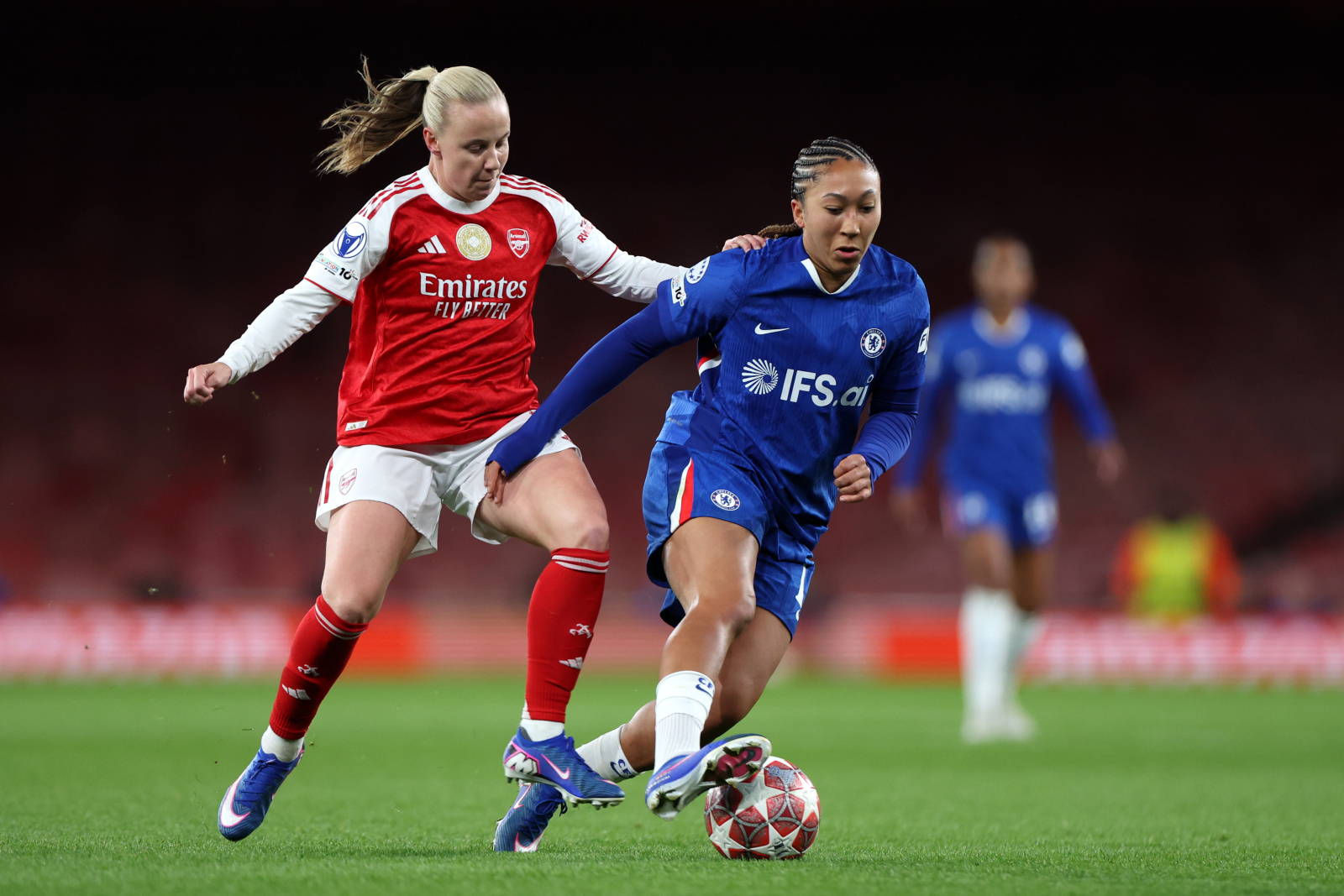
- Chelsea fixtures: Away on 27 September; home on 27/28 March
- Manchester City fixtures: Away on 3/4 October; home on 30/31 January
- North London derbies: Away on 24/25 October; home on 13/14 March
- Final fixture: Charlton Athletic at home, 21–23 May
- Hardest-looking period: 19 September to 3/4 October
- Key congestion period: 13 March to 1 April
- Home stadium: All 13 WSL home matches at Emirates Stadium
Arsenal’s Next Five WSL Fixtures
| Date | Opponent | Venue | Kick-off | Coverage |
|---|---|---|---|---|
| 6 Sept | Brighton & Hove Albion | Away | 12:00 PM | Preview to follow |
| 13 Sept | Crystal Palace | Home | 2.45 PM | Preview to follow |
| 19 Sept | Manchester United | Home | 5.30 PM | Preview to follow |
| 27 Sept | Chelsea | Away | 4.30 PM | Preview to follow |
| 4 Oct | Manchester City | Away | 2.30 PM | Preview to follow |
Arsenal Women’s Full 2026/27 WSL Fixtures
| Date | Opponent | H/A | Kick-off | Result | Coverage |
| 6 Sept | Brighton & Hove Albion | A | 12.00 PM | — | — |
| 13 Sept | Crystal Palace | H | 2.45 PM | — | — |
| 19 Sept | Manchester United | H | 5.30 PM | — | — |
| 27 Sept | Chelsea | A | 4.30 PM | — | — |
| 4 Oct | Manchester City | A | 2.30 PM | — | — |
| 18 Oct | Birmingham City | H | 12.30 PM | — | — |
| 25 Oct | Tottenham Hotspur | A | 2.00 PM | — | — |
| 1 Nov | Aston Villa | H | 12.30 PM | — | — |
| 7 Nov | Liverpool | A | 12.00 PM | — | — |
| 14 Nov | London City Lionesses | H | 5.30 PM | — | — |
| 22 Nov | West Ham United | H | 12.30 PM | — | — |
| 12 Dec | Everton | A | 12.30 PM | — | — |
| 20 Dec | Charlton Athletic | A | 12.30 PM | — | — |
| 10 Jan | Brighton & Hove Albion | H | 12.30 PM | — | — |
| 21 Jan | Liverpool | H | 7.00 PM | — | — |
| 24 Jan | London City Lionesses | A | 2.00 PM | — | — |
| 30 Jan | Manchester City | H | 5.30 PM | — | — |
| 7 Feb | Birmingham City | A | 2.00 PM | — | — |
| 14 Feb | Crystal Palace | A | 2.00 PM | — | — |
| 13 Mar | Tottenham Hotspur | H | 5.30 PM | — | — |
| 17 Mar | Aston Villa | A | 7.30 PM | — | — |
| 28 Mar | Chelsea | H | 2.00 PM | — | — |
| 4 Apr | Everton | H | 2.00 PM | — | — |
| 2 May | West Ham United | A | 2.00 PM | — | — |
| 9 May | Manchester United | A | 1.00 PM | — | — |
| 22 May | Charlton Athletic | H | 12.00 PM | — | — |
Arsenal Women Fixtures 2026/27
The Gunners Have No Time to Ease into the Title Race
An away match against Brighton provides an awkward opening assignment. Arsenal were held to a 1-1 draw at Broadfield Stadium last season, one of six draws that ultimately prevented an excellent campaign from becoming a title-winning one.
The following home game against promoted Crystal Palace offers an opportunity to establish momentum. Arsenal will need it because their schedule then changes sharply.
Manchester United arrive on 19 September. Arsenal begin the Champions League league phase on 22 September, travel to Chelsea five days later and play their second European fixture on 30 September or 1 October. An away match against Manchester City follows on 3 or 4 October.
That potentially means five important matches in approximately two weeks:
- Manchester United at home
- Champions League matchday one
- Chelsea away
- Champions League matchday two
- Manchester City away
Two of those league opponents finished among Arsenal’s principal domestic rivals, while City inflicted Arsenal’s only WSL defeat last season on their way to winning the title.
A poor sequence would leave Renée Slegers’ side chasing the leaders before the campaign has properly settled. A strong one would provide early evidence that the summer rebuild has improved Arsenal’s ability to compete on multiple fronts.
The Schedule Targets Last Season’s Real Weakness
Arsenal’s 2025/26 league record was impressive: 15 victories, six draws and only one defeat produced 51 points and second place. The problem was not the number of matches they lost. It was how frequently potential victories became draws.
Points were left behind against opponents including Chelsea, Manchester United, Tottenham and Aston Villa. In a title race decided by fine margins, avoiding defeat is not always enough.
The 2026/27 calendar provides early opportunities to correct that. Arsenal face United, Chelsea and City within their opening five matches, before meeting Tottenham and Villa during the following month.
Their new-look squad should provide Slegers with more options. Georgia Stanway, Géraldine Reuteler, Ona Batlle, Lisa Baum and Selina Cerci have arrived during a summer in which Arsenal have strengthened both midfield and defence. Manuela Zinsberger, Laia Codina and Victoria Pelova are among the departures.
The opening schedule will quickly reveal whether the additional depth produces different results in the matches that cost Arsenal most heavily last season.
October and November Offer Little Recovery Time
The first international break arrives immediately after the visit to Manchester City. Arsenal return against Birmingham City before travelling to Tottenham for the first north London derby. A third Champions League fixture follows, with Aston Villa then visiting the Emirates.
November continues the pattern of WSL weekends surrounding European matches. Arsenal travel to Liverpool before Champions League matchday four, then host London City Lionesses and West Ham around the fifth European fixture.
The domestic opposition is more varied than during the opening weeks, but the schedule leaves few extended periods in which Arsenal can focus solely on the league.
That is where the rebuilt squad may become particularly important. Competing for every trophy requires Slegers to rotate without substantially lowering the level of the team.
January Brings the Champions to the Emirates
Arsenal return from the winter break with a home match against Brighton before entering the Women’s FA Cup in the fourth round. Liverpool and London City follow in the league, leading into Manchester City’s visit to Emirates Stadium on 30 or 31 January.
The timing could make that one of the most influential fixtures of the season. By then, Arsenal will know how much damage their difficult opening sequence caused—or how strong a platform it created.
City were the only team to defeat Arsenal in the league last season. Taking more points from the champions across their two meetings may be essential if Slegers’ side are to reverse the final standings.
March Could Decide More Than One Competition
Arsenal’s second major pressure point arrives in March. They return from the international break with a north London derby at Emirates Stadium before travelling to Aston Villa four days later. The FA Cup quarter-final, if Arsenal advance, is scheduled for 21 March.
The first leg of a possible Champions League quarter-final follows on 23 or 24 March. Chelsea then visit the Emirates on 27 or 28 March, immediately before the European second leg.
That creates the following possible sequence:
- Tottenham at home
- Aston Villa away
- FA Cup quarter-final
- Champions League quarter-final first leg
- Chelsea at home
- Champions League quarter-final second leg
Last season, Arsenal’s European campaign ended with a 4-3 aggregate defeat against OL Lyonnes, while Brighton eliminated them from the FA Cup quarter-finals. Returning to the latter stages of both competitions would turn March into the most demanding month of their new season.
It could also determine the league. Dropped points against Chelsea or Villa during that period may be difficult to recover during a short run-in.
European Progress Could Reshape the Final Weeks
Arsenal’s final three WSL fixtures are away to West Ham, away to Manchester United and at home to Charlton Athletic. On paper, ending against newly promoted Charlton at Emirates Stadium appears favourable. Reaching that match in a title-winning position may prove more complicated.
The West Ham and Manchester United fixtures are currently scheduled for the same weekends as the two Champions League semi-final legs. Both league matches will need to move if Arsenal reach that stage of Europe.
The Women’s FA Cup final follows on 15 May, with the final WSL weekend scheduled for 21–23 May and the Champions League final on 29 May.
A successful Arsenal season could therefore end with league matches being rearranged around two cup competitions. The run-in is not intimidating solely because of the opponents; its difficulty will depend on how much Arsenal still have to play for.
Every League Home Match Comes to the Emirates
All 13 of Arsenal’s WSL home fixtures are scheduled to take place at Emirates Stadium. That gives the team a consistent home venue throughout the campaign and places matches against Manchester United, Manchester City, Chelsea and Tottenham on the club’s biggest stage.
It also gives supporters one destination for every league home game, making the schedule easier to follow and plan around.
Arsenal won the Champions League in 2024/25 and lost only once in the WSL last season. The next step is not proving they can compete with Europe’s strongest teams. It is maintaining that level often enough to win the league.
Their schedule will test that ambition immediately. By the first international break, Arsenal may already know whether their stronger squad has solved the problem that defined last season: too many important matches ending level.
Source: Arsenal – Arsenal Women Fixtures 2026/27

Leave a Reply